Because today is also the sabbath, the shofar will not be sounded. In a traditional Jewish community the shofar would have been sounded each day for several days to warn of the approaching day of judgment.
According to the Talmud, on this first day of the New Year, God seals the destiny of the righteous and the wicked, but leaves open the accounts of those in-between. For those of us -- and least I hope I can include myself -- in-between the ten days between now and Yom Kippur are offered as a time of penitence and reformation.
Continuing with the Amidah prayer, we begin with a verse assigned specifically for the Ten Days of Awe that begin on Rosh Hashana:
Remember us for life, King who desires life; inscribe us in the Book of Life, for Your sake, O living God.
Then we continue with the daily prayer
O King, (You are) a helper, a savior and a shield. Blessed are You L-rd, Shield of Abraham.
You are mighty forever, my Lord; You resurrect the dead; You are powerful to save.
Because it is still summer we pray:
He causes the dew to descend.
If it was winter we would pray, "He causes the wind to blow and the rain to fall."
And we continue,
He sustains the living with loving kindness, resurrects the dead with great mercy, supports the falling, heals the sick, releases the bound, and fulfills His trust to those who sleep in the dust. Who is like You, mighty One! And who can be compared to You, King, who brings death and restores life, and causes deliverance to spring forth!
--+--
Just before sunrise I left the city and was driving north among the corn and grapes as light exploded over the Sierra Nevada mountains. The road headed higher. There was a sign for 2000 feet, then 3000. I never noticed more than 5000.
I was driving to Yosemite in search of many new things, but on this Rosh Hashana I would especially look for flowing water to practice Tashlikh, a symbolic casting away of sin. What were the sins -- attitudes and actions that separate me from God -- that I should be especially mindful to give away.
I was driving to Yosemite in search of many new things, but on this Rosh Hashana I would especially look for flowing water to practice Tashlikh, a symbolic casting away of sin. What were the sins -- attitudes and actions that separate me from God -- that I should be especially mindful to give away.
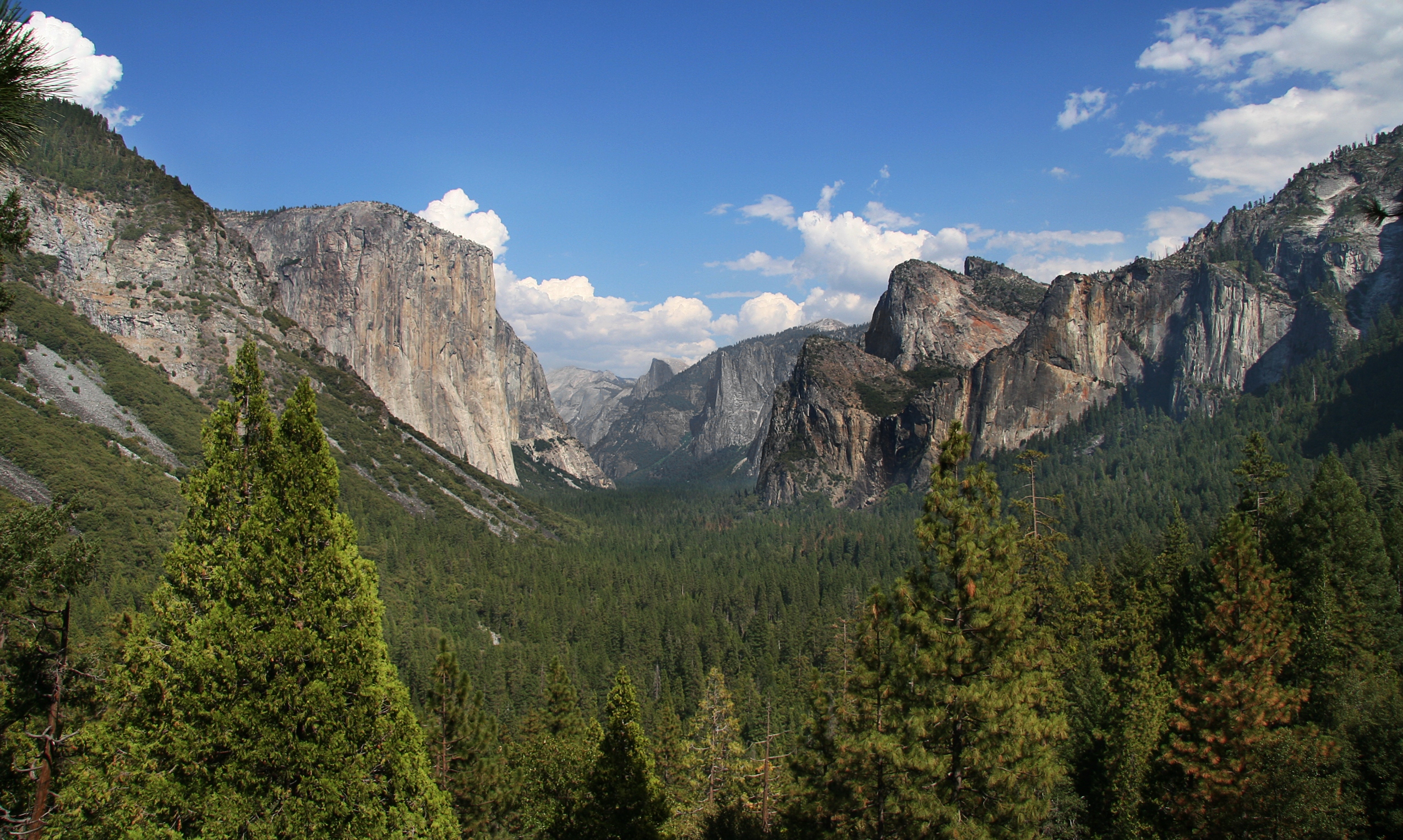
The Yosemite Valley was suddenly before me. I had driven through a long tunnel to emerge with El Capitan right there. I had seen enough Ansel Adams photographs to be sure.
The morning light was glistening along the perpendicular granite, the west side of Half Dome was still in shadow, just a wisp of water was falling at Bridalveil.
After a pause I drove into the valley, walked to the base of the falls and found the Awanhnee Hotel. From there I hiked along the Merced River until about noon, thinking about what separates me from God, feeling closer to God both in the thinking and the walking.
On my way back to the city I stopped again at the Merced, just where it flows closest to El Capitan. From the sandy bank I threw into the flow a breadcrumb for distraction, both external and internal, but especially for internal distraction.
I threw a second breadcrumb for the specific distraction of worry. A third joined the slowly moving stream for the pride that often spawns worry. Then I crumbled the remaining bread into a hundred pieces for each prideful thought and action.
But instead of throwing the tiny crumbs into the river, I put some in each pant's pocket. Then praying for forgiveness and giving thanks, I turned out my pockets and their contents into the stream. This was my approach to Tashlikh.
The tradition comes from Michah 7:19, "You will again have compassion on us; you will tread our sins underfoot and hurl all our iniquities into the depths of the sea." I watched the crumbs flow toward the Pacific and returned to the car.

No comments:
Post a Comment